Best Coffee on the Big Island
From Kona coffee belt to Hilo's east side — the Big Island cafés, roasters, and farms worth your driving time, ranked by what's actually in the cup.
Guide · Regions
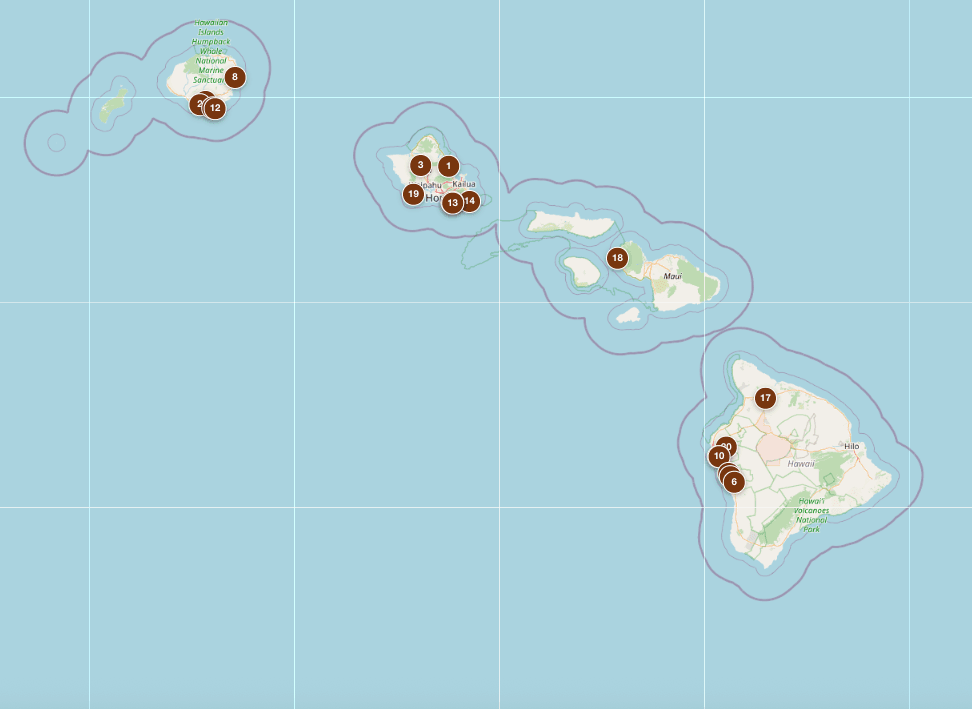
Hawaii coffee is not one flavor. Each island and district combines different elevation, rainfall, farm scale, processing, and visitor access.
Kona is the best-known Hawaiian coffee origin and the strongest visitor-search region. Start here when your trip is centered on farm tours, 100% Kona bags, and tasting rooms along the coffee belt.
The Big Island also has coffee outside Kona. Kaʻu is often discussed as a high-quality origin in its own right, while Hamakua and Puna give visitors other Big Island growing contexts to compare.
These regions are especially useful for people who want Hawaiian coffee but do not want every recommendation to collapse into Kona.
Maui and Kauai have coffee experiences that connect agriculture, roasting, and visitor routes. Oahu is more cafe and roaster-heavy, with some North Shore agricultural context.
For most travelers, the right region is the one that fits the island they are already visiting. A good local roaster or farm visit is often more useful than chasing Kona from another island.
Choose Kona for the classic farm-tour and 100% Kona buying path. Choose Kauai or Maui when the trip is already island-specific. Choose Oahu for urban cafes, roasters, and North Shore route stops.
Use next
From Kona coffee belt to Hilo's east side — the Big Island cafés, roasters, and farms worth your driving time, ranked by what's actually in the cup.
Maui coffee from Kula to Lahaina — upcountry cafés, north-shore roasters, and the West Maui spots worth a stop after the road to Hana.
Kauaʻi-grown coffee at the source — Hanalei mornings, Poʻipū roasters, and the south-shore cafés worth detouring for.
Nothing to show here.
Examples
A cornerstone of the Kona coffee experience, perfect for those who want a high-energy, informative tour of a large-scale, historic farm. You'll get a great introduction to the botany of the region—including cacao and black pepper—and a generous tasting bar where you can sample a dozen different roasts. If you're looking for a quiet, intimate, and small-lot tasting experience, this isn't it; this is a high-volume operation designed for the crowds.
A tiny, owner-operated farm in Pahala where you can stock up on rare peaberry beans and have a long, personal chat with Lisa. It's genuinely good for those who want a small-batch, grower-led experience and the kind of coffee that keeps people coming back for years. If you're looking for a polished tasting room with strict 9am-to-5pm business hours, this isn't it—this is a working farm that runs on island time, so call ahead to make sure they're open.
America's largest coffee farm offers a professional, polished experience with a free self-guided walking tour and a generous tasting station where you can compare roasts side-by-side. It's a fantastic spot for families, those who want to an easy, accessible glimpse into coffee production, and anyone looking to stock up on beans for the same price as the retail stores. If you're looking for an intimate, small-batch farm visit or a quiet, hidden-away sanctuary, this is a different category of experience—head to a smaller estate up the road.
Nothing to show here.
Common questions
In KopeMaps, Big Island has the deepest farm-tour and Kona-origin coverage. Kauai, Maui, and Oahu still matter for island-specific visitor routes and roaster discovery.
Yes, but geographic-origin claims should still be read carefully. A label or seller should make the island, district, or blend percentage clear.
If you are on Big Island, start with Kona or Big Island farm collections. If you are on Oahu, Maui, or Kauai, start with the island-specific KopeMaps collection for that island.