100% Kona Coffee in Hawaii
100% Kona coffee — not the 10% blend Waikīkī sells. Traceable, single-estate, on-farm. Where to drink it, where to buy it, how to spot the fakes.
Guide · Authenticity
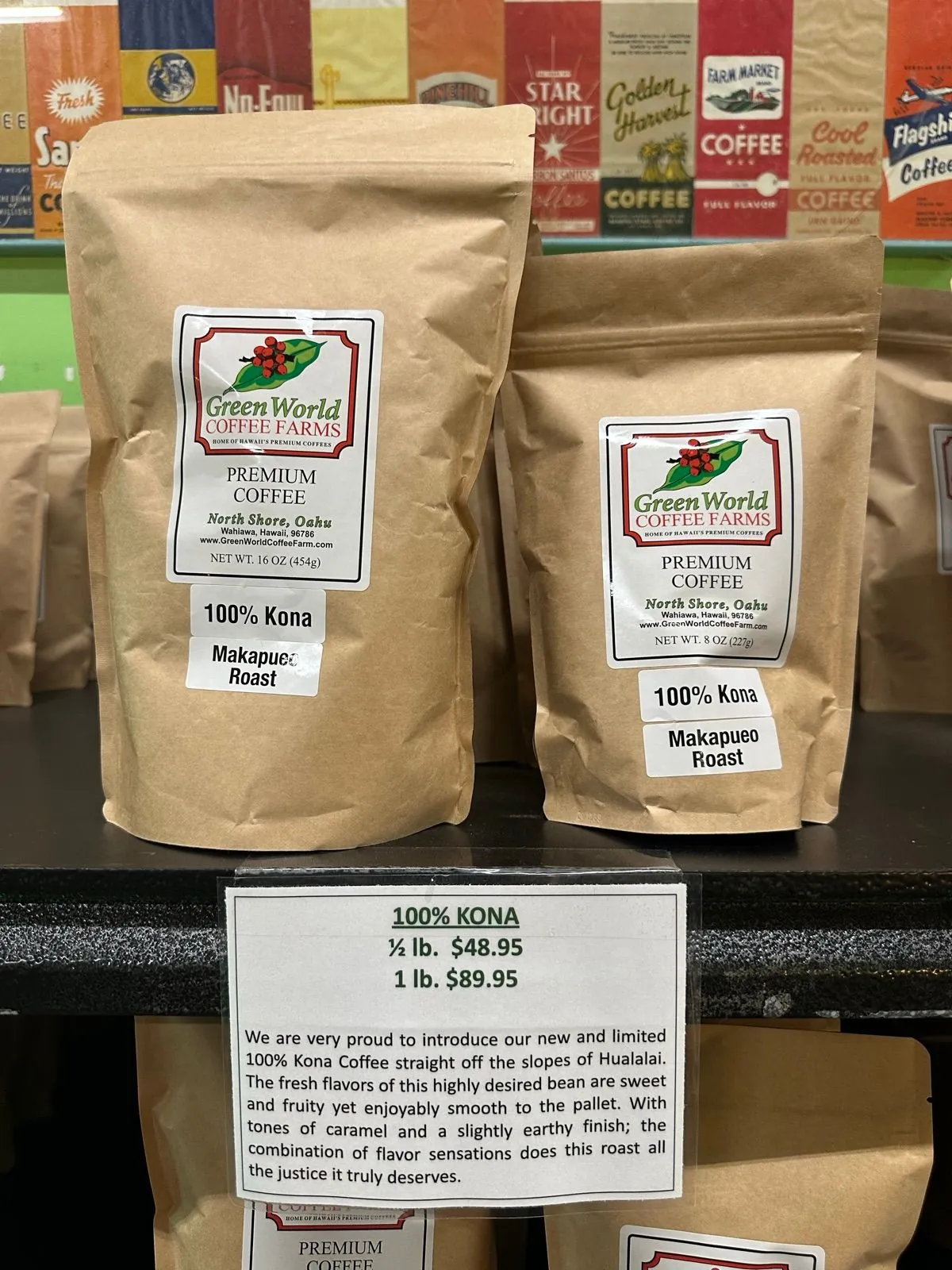
Most "Kona" coffee on shelves is a blend that can be a small fraction Kona. The single best protection is the label: a clear 100% Kona identity statement, or a blend that states its exact Kona percentage.
Real Kona coffee is grown in the Kona districts of Hawaii Island, and the most reliable way to confirm you are buying it is the label, not the packaging art. Look for a plain "100% Kona Coffee" identity statement, ideally from a farm or roaster that tells you where the beans were grown.
If the bag says "blend," that is not automatically a problem, but it changes what you are buying. A blend should state exactly how much Kona coffee is inside. If it does not, treat the Kona name as marketing rather than a guarantee.
Kona is expensive and the growing region is small, so demand has always outrun supply. For years that gap was filled by blends that leaned on the Kona name while containing mostly cheaper imported coffee.
Under the older rule, a product could carry the Kona name as a blend with as little as ten percent Kona coffee — meaning up to ninety percent came from somewhere else. That is the gap shoppers keep falling into.
Hawaii tightened its coffee labeling law in two steps. Since July 1, 2024, any Hawaii-origin blend has to disclose each coffee's origin and its weight percentage on the front of the package, and the rule now also covers roasted, instant, ready-to-drink, and bulk single-serve coffee.
The bigger change is still ahead. Act 198, signed in 2024, raises the threshold so that beginning July 1, 2027, a coffee may not use a Hawaii region name like Kona, Kaʻu, or Maui unless at least fifty-one percent of it actually comes from that region. Genuine 100% Kona was always allowed and is unaffected — these rules target blends.
Find the identity statement — the line that names the coffee — and read it literally. The percentage and the word "blend" matter more than any image of a beach or a volcano on the front.
The most common mistakes happen when the buying moment is rushed — at an airport, a duty-free counter, or a souvenir shelf where the packaging does the talking and the label is small.
When you can, buy farm-direct or from a roaster that publishes where its coffee is grown — that is the simplest way to remove doubt. If you are unsure, it is fair to ask a seller what percentage of a bag is Kona and where the rest is from.
On KopeMaps, farm, roaster, and shop pages flag whether a place is a verified 100% Kona source, and the 100% Kona collection groups the cleanest options together so you can compare before you buy.
Use next
100% Kona coffee — not the 10% blend Waikīkī sells. Traceable, single-estate, on-farm. Where to drink it, where to buy it, how to spot the fakes.
The Kona coffee belt has hundreds of farms. These are the ones worth stopping for — single-estate, on-farm roasters, and the cafés that pour them right.
Nothing to show here.
Examples
A cornerstone of the Kona coffee experience, perfect for those who want a high-energy, informative tour of a large-scale, historic farm. You'll get a great introduction to the botany of the region—including cacao and black pepper—and a generous tasting bar where you can sample a dozen different roasts. If you're looking for a quiet, intimate, and small-lot tasting experience, this isn't it; this is a high-volume operation designed for the crowds.
Roaster handling three Hawaiian growing regions — Kona, Ka'u, and Waialua (Oahu) — with competition wins and direct shipping from Captain Cook.
Nothing to show here.
Common questions
Look for a clear "100% Kona Coffee" identity statement, ideally from a farm or roaster that names where the coffee was grown. If the label says "blend" without a percentage, treat the Kona name with caution.
It means the bag mixes some Kona coffee with coffee from other places. The label should state the Kona percentage. Historically a blend needed only ten percent Kona, so a blend can contain very little.
No. A properly labeled blend is legal and can be enjoyable. The problem is when shoppers assume a blend is full-origin Kona, or when the label hides the percentage.
Act 198 raises the threshold so that beginning July 1, 2027, a coffee cannot use a Hawaii region name like Kona unless at least 51% of it comes from that region — up from the old 10% minimum.
For blends, yes. Since July 1, 2024, Hawaii-origin blends must disclose each coffee's origin and weight percentage on the front of the package.
The most reliable path is farm-direct or a roaster that documents its source. KopeMaps groups verified 100% Kona farms and roasters in its 100% Kona collection so you can compare direct-buying options.